
Staying in the Home You Love
For many homeowners in the Cincinnati area, the idea of leaving a home filled with decades of memories is difficult to imagine. The good news is that with thoughtful remodeling, you don’t have to. Aging in place — the ability to live safely and comfortably in your own home as you get older — is entirely achievable with the right modifications.
At JRC Remodeling, we’ve helped many homeowners across Morrow, Mason, Lebanon, and the greater Cincinnati area make their homes safer and more accessible. Whether you’re planning ahead or responding to a current need, this guide covers the most impactful modifications you can make.
The Bathroom: Your Most Important Room to Modify
The bathroom is statistically the most dangerous room in the home for older adults. Wet surfaces, tight spaces, and the need to step over high tub walls create real fall risks. Here are the modifications that make the biggest difference:
Walk-In Showers
Replacing a traditional bathtub with a walk-in shower eliminates the need to step over a high ledge — one of the most common causes of bathroom falls. A curbless or low-threshold shower entry makes access easy, even with mobility aids.
What we recommend:
- Zero-threshold or low-curb shower entries
- Built-in shower benches or fold-down seats
- Handheld showerheads on adjustable slide bars
- Non-slip tile flooring with proper drainage slope
Grab Bars and Support Rails
Strategically placed grab bars provide stability where you need it most — near the toilet, inside the shower, and along walls where balance support is helpful. Modern grab bars come in sleek designs that look like intentional design elements rather than medical equipment.
Comfort-Height Toilets
A comfort-height toilet (17-19 inches versus the standard 15 inches) makes sitting down and standing up significantly easier. This is one of the simplest upgrades with one of the biggest daily impacts.
Wider Doorways
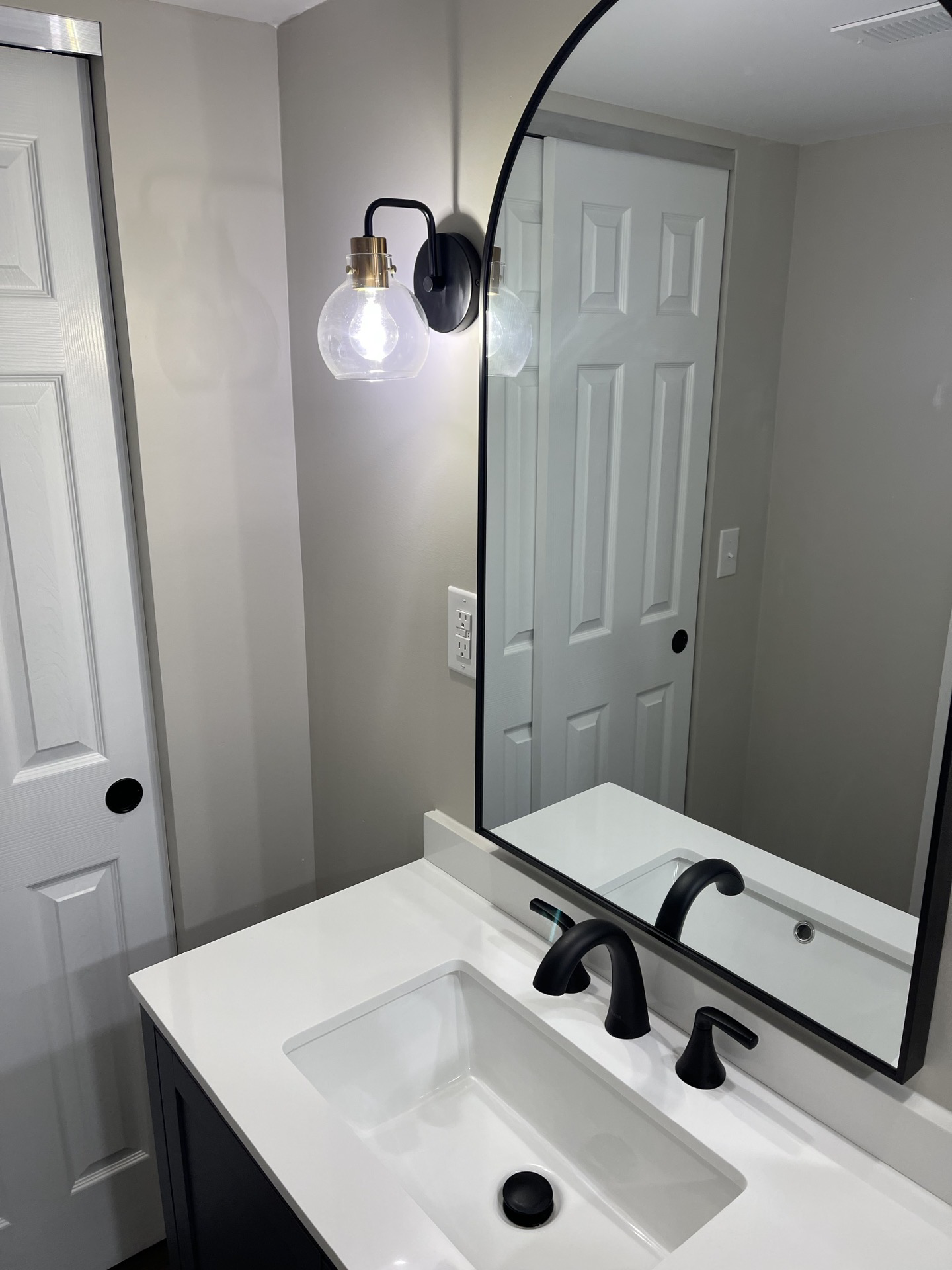
Standard bathroom doors are often too narrow for wheelchairs or walkers. Widening the doorway to at least 36 inches — or installing a pocket door — makes the bathroom accessible regardless of future mobility needs.
Kitchen Modifications for Easier Living
The kitchen is where you spend a significant portion of your day. Making it accessible ensures you can continue cooking, entertaining, and enjoying meals independently.
Lowered Countertops and Cabinets
Standard counter heights may become uncomfortable or unreachable as mobility changes. Incorporating sections of lower countertop — or pull-down shelving in upper cabinets — keeps everything within easy reach.
Lever-Style Hardware
Replacing traditional round knobs with lever-style handles on cabinets and faucets makes operation much easier for hands affected by arthritis or reduced grip strength. This is an inexpensive upgrade that makes a daily difference.
Better Lighting
Good visibility in the kitchen is essential for safety. Under-cabinet lighting, bright overhead fixtures, and task lighting at work surfaces reduce the risk of cuts, burns, and other accidents.
Pull-Out Shelves and Drawers
Deep lower cabinets that require bending and reaching are difficult for many older adults. Pull-out shelves and drawer inserts bring contents to you, eliminating the need to crouch or strain.
Flooring Throughout the Home
Flooring is a whole-home consideration for aging in place. The wrong flooring can be a significant fall hazard.
What to look for:
- Non-slip surfaces in bathrooms, kitchens, and entryways
- Low-pile or no-pile carpeting that doesn’t catch walkers or wheelchair wheels
- Level transitions between rooms — no raised thresholds or uneven surfaces
- LVP (Luxury Vinyl Plank) offers excellent slip resistance, comfort, and durability
We recommend eliminating scatter rugs and unsecured mats, which are among the leading causes of falls in the home.
Doorways and Hallways
Moving through your home should be effortless. Standard doors and hallways can become obstacles when mobility changes.
Widen Doorways to 36 Inches
The ADA recommends a minimum clear opening of 32 inches, but 36 inches provides comfortable clearance for wheelchairs, walkers, and anyone who needs extra room.
Lever Door Handles
Like cabinet hardware, lever-style door handles are much easier to operate than round knobs — especially with arthritis, reduced hand strength, or when carrying items.
Pocket or Barn Doors
In tight spaces, traditional swinging doors can be awkward and space-consuming. Pocket doors or wall-mounted sliding doors save space and provide easy access.
Lighting and Electrical Improvements
Good lighting reduces fall risk and makes daily activities easier and more enjoyable.
Key improvements include:
- Motion-sensor lights in hallways, staircases, and bathrooms for nighttime safety
- Rocker-style light switches that are easier to operate than toggle switches
- Additional outlets at accessible heights to reduce the need for extension cords
- Smart home systems that let you control lights, locks, and thermostats from your phone or with voice commands
Stairways and Multi-Level Homes
If your home has multiple levels, there are several options to consider:
- Stair lifts for easy access between floors
- First-floor bedroom and bathroom conversions to eliminate the need for stairs entirely
- Non-slip stair treads and sturdy handrails on both sides
- Better stairway lighting for visibility on every step
For many homeowners, converting a main-floor room into a bedroom suite — complete with an accessible bathroom — is the most practical long-term solution.
Planning Ahead vs. Reacting to Need
One of the most important pieces of advice we give our clients: don’t wait until you need these modifications to make them. Planning ahead has several advantages:
- Lower stress. Making modifications on your timeline is much easier than scrambling after an injury or health change.
- Better design. When you’re not in a rush, you can make thoughtful choices that look great and function perfectly.
- Increased home value. Accessible features are increasingly valued by buyers of all ages, making your home more attractive if you ever do decide to sell.
- Cost savings. Incorporating accessibility into a planned remodel is more cost-effective than retrofitting later.
JRC Remodeling: Your Partner in Aging-in-Place Modifications
At JRC Remodeling, we understand that your home is more than a building — it’s where your life happens. Our team has the experience and sensitivity to help you make modifications that preserve your independence while maintaining the beauty and character of your home.
We serve homeowners throughout Morrow, Cincinnati, Mason, Lebanon, Loveland, West Chester, and the entire Tri-State area. Whether you need a single bathroom modification or a comprehensive whole-home accessibility plan, we’re here to help.
Contact JRC Remodeling today for a free consultation. Call us at (513) 615-4810 or request a consultation online. Let’s make your home work for you — for years to come.